




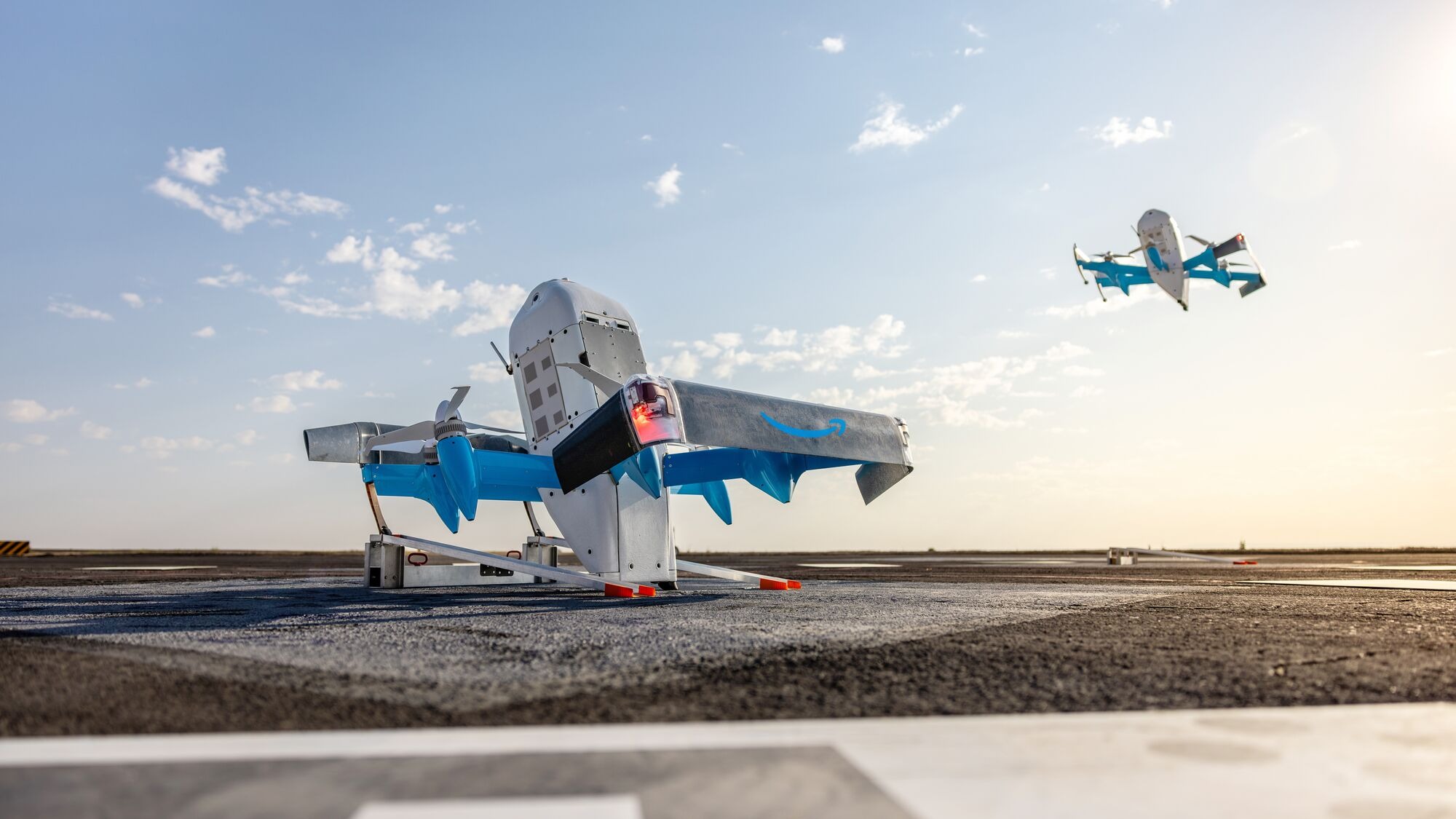

Announced this summer under a joint FAA and TSA proposal, Part 108 could reshape low-altitude airspace by opening the door for Beyond Visual Line of Sight (BVLOS) drone operations. The rule, now in the public comment stage, marks a major departure from Part 107 and introduces questions for both the unmanned and manned communities on how aircraft will safely share skies below 400 feet.
At the core of the discussion for manned pilots: who has right-of-way, how will drones and crewed aircraft avoid each other, and can portable electronic conspicuity devices offer a bridge for aircraft without ADS-B Out.
From Part 107 to Part 108
The FAA introduced Part 107 in 2016 to establish a framework for small UAS commercial operations. Those rules placed strict limits on where and how drones could fly—most notably, keeping aircraft within the operator’s visual line of sight. That framework enabled thousands of real estate surveys, construction inspections, and infrastructure checks, but it also capped what civilian drones could achieve.
Part 108 proposes to move beyond those limitations. By creating a regulatory structure for autonomous and remote operations, the FAA aims to enable scalable drone uses such as long linear inspections, emergency response, cargo delivery, and dock-based deployments.
I recently sat down with Christian Ramsey, chief commercial officer at uAvionix, who said Part 108 represents many additional opportunities for drone use, including dock-based deployments, pipeline and powerline inspections, and package delivery. He also noted that the rule shifts responsibility from the individual pilot to the operating organization, which must ensure training, equipment standards, and system-level safety.
That shift comes with new layers of complexity. Under Part 108, organizations—not just individual pilots—will be held liable for training, equipment standards, and safe execution of operations. For many, the emphasis on systems and organizational accountability represents a turning point from the one-person, one-drone model common under Part 107.
The Rulemaking Process
The FAA has set October 6 as the deadline for public comments. Regulators are expected to sift through thousands of responses before finalizing the rule, with a target date early next year. Because the rule is co-issued by the TSA, security considerations play as much a role as safety.
Paul Rossi, director of safety at Causey Aviation Unmanned, was also part of our conversation. Rossi noted that one area of uncertainty is how current Part 107 waivers—such as those used to allow limited BVLOS operations under current regulations—will be addressed. He explained that many operators using short-range waivers are unsure whether those provisions will ultimately need to find a way to remain under 107 or migrate into 108.
Right-of-Way Below 400 Feet
Why does it matter for the manned aviation world?
Part 108 is designed primarily for operations below 400 feet AGL. In those low-altitude corridors, drones would be required to yield right-of-way to crewed aircraft—but with conditions.
The proposal specifies that crewed aircraft arriving or departing airports always have priority. It also creates a distinction based on equipment, though. Crewed aircraft broadcasting ADS-B Out—or possibly its lower-cost cousin (if approved), electronic conspicuity (EC)—would be recognized by drones equipped with ADS-B In. Without those signals, collision avoidance becomes far less reliable.
Ramsey said the debate centers on detection capability.
“Because if the drone always yields to a manned aircraft, then the drone has to have that capability to detect that manned aircraft so it can stay away from it,” Ramsey said.
He added that non-ADS-B alternatives such as radar or cameras are limited.
“They’re range limited, they’re weather limited, they’re daytime or nighttime limited.”
The FAA’s draft therefore envisions scenarios where drones may not always be required to yield if crewed aircraft are not broadcasting a detectable signal. That clause has drawn sharp reactions from some in general aviation, especially given that many GA aircraft are still not ADS-B In equipped.
Portable EC as “Drone Repellent”
One solution, as noted in the proposed 108 wording, are electronic conspicuity (EC) devices. These devices, similar in size and shape to portable ADS-B In devices, are not currently an option in the U.S., though are in limited use abroad. EC devices are battery-powered, transferable between aircraft, and typically cost under $1,000.
Ramsey described EC as “drone repellent.” By broadcasting a short-range ADS-B signal—not tied to any one tail number—aircraft using an EC device can be detected by BVLOS drones, which would then be required to avoid them.
“It’s like turning your headlights on is really what it’s like, right?” Ramsey said. “So others can see you and you can see them.”
For balloonists, ultralight pilots, and ag operators—aircraft types often flying low and slow without installed ADS-B—EC could offer an immediate path to greater protection without costly airframe modifications.
Industry Reactions
Many GA pilots remain understandably wary of any suggestion that drones might hold right-of-way in any circumstance. Drone operators, meanwhile, emphasize that their systems are designed to avoid collisions and have no interest in creating conflicts, although ADS-B signals are the best way to do this in most cases.
Some manned pilots have raised concerns about privacy and tracking associated with ADS-B Out. Portable EC devices may address those issues by broadcasting anonymously, without linking directly to a tail number. They might also give pilots discretion to power them on only when desired.
The FAA has signaled that manned aircraft under Part 91 or other rules will continue operating as before if the current Part 108 wording is implemented. But the increase in drone flights under 400 feet could change how GA pilots think about low-level flying.
Call for Pilot Comments
With the comment period open until October 6, Ramsey urged pilots to weigh in. His company’s new Pilot Awareness and Portable EC Hub provides background information and links to the FAA docket.
According to Rossi, the FAA received tens of thousands of comments on Remote ID when that was introduced, but only a fraction of those responses have come in regarding the Part 108 proposal so far.
Looking Ahead
The FAA will face challenges in balancing diverse stakeholders and moving from a proposed framework to a final rule that can scale nationally. Questions of cost, infrastructure, and public acceptance will persist.
Still, Part 108 marks a significant step toward integrating drones into the National Airspace System in a way that acknowledges both safety and operational realities. For GA pilots, the emergence of portable EC as a recognized tool could extend safety benefits that were previously out of reach.
As Ramsey put it, “They’re just saying, ‘I need a way to see you so I can avoid you.’”
The outcome of this rulemaking will determine how—and how safely—the next era of low-altitude aviation unfolds.
Pilots should make their voices heard.


As an aircraft owner, ATP rated pilot of 50 years, A&P/IA with an FCC General Radio Telephone certificate, you can’t get anything approved by the FAA now, no field approval’s.
Most of the pilot owners that I come in contact with are struggling to afford a set of tires for their 172 ($1000) let alone a piece of equipment that does nothing to improve the safety or performance of the aircraft. If the Drone operators feel that they want to operate autonomously, they and or the FAA can finance this whole thing. We’re still mandated to install enough equipment in our A/C that does no good to most of us on a daily/ yearly basis.
I 100% agree with the previous poster. I did my part and submitted a comment opposing any changes to the pt 91 right of way rules based on ADS-B signals.
The portable EC devices would enhance safety for glider clubs. It’s time for the FAA to permit their use in America.
I do a lot of low-level (well below 500 feet AGL) oblique landscape aerial photography over sparsely populated areas maintaining a horizontal separation of at least 500 feet from any person, vehicle, vessel, or structure (14 CFR § 91.119(c). That’s the principal reason I own and fly an airplane which is equipped with ADS-B In and Out. Nevertheless, I have concerns about this proposed rule. Will the UAS see and avoid me based on ADS-B and/or artificial sight? Many UAS are very small and difficult for a pilot to see. Are we gradually surrendering surface through 400 or 500 feet AGL airspace to UAS? Is 108 the beginning? Will the FAA eventually recommend that GA pilots avoid surface through 500 feet just to be on the safe side?