




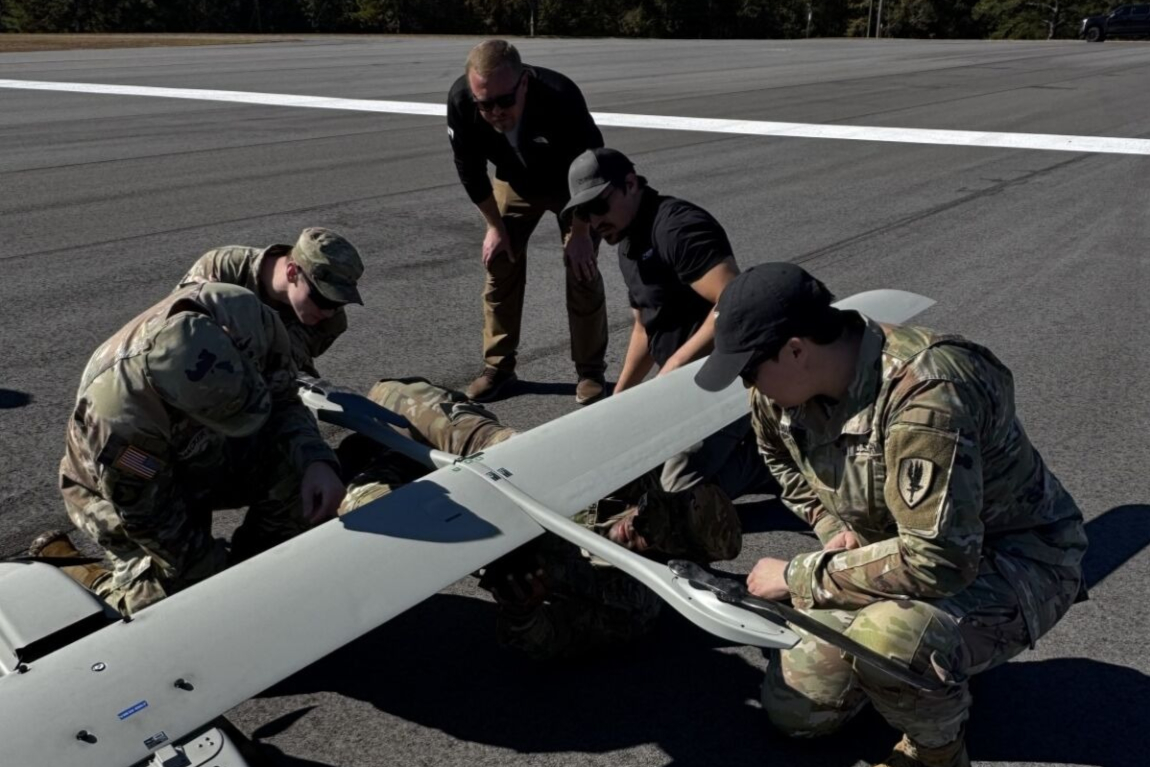

Army aviation soldiers at Fort Rucker, Alabama, began training last week on the Lockheed Martin VXE30 Stalker uncrewed aircraft system (UAS) as the service prepares to field the equipment next month. The system incorporates lessons from recent conflicts, including reduced acoustic and visual signatures, vertical takeoff capability and updated munitions technology. The effort reflects an ongoing push to integrate new UAS platforms into training as the Army looks to shift many roles away from manned aviation.
Army Maj. Wolf Amacker, UAS and Tactics Branch chief for the center’s Training and Doctrine Directorate, said the introduction of the Stalker marks a step forward in layered reconnaissance training.
“This is the first time in years that we will be utilizing a Group 2, almost Group 3 size UAS in support of an Army course at Fort Rucker, since before the Shadow was really employed,” Amacker said.
Built with a modular open systems approach, the aircraft can adapt to sensors, payloads and other technologies as operational needs evolve. Army Maj. Rachel Martin, director of the Air Cavalry Leaders Course and Unmanned Advanced Lethality Course, noted the Stalker’s ability to launch and recover vertically before transitioning to forward flight.
“Its reduced visual and acoustic signature makes striking a target at 300 feet very likely, something that wasn’t possible with louder systems, like the Shadow” Martin said.
The system integrates with the Army’s Common Lethality Integration Kit, allowing soldiers to select warheads and employ both new payloads and existing munitions, including 81 mm mortars.
Martin said the option provides a lower-cost alternative to traditional systems.
“Instead of a Hellfire missile costing $100,000 to $150,000 per round, this solution costs about $800,” she said.
Officials said the service is also exploring the use of in-house printed training rounds to expand instruction opportunities. Training with the Stalker is scheduled to continue into December as instructors prepare soldiers to employ the system in battalion- and brigade-level missions.

I wonder if they will be awarded Army Aviator wings?