




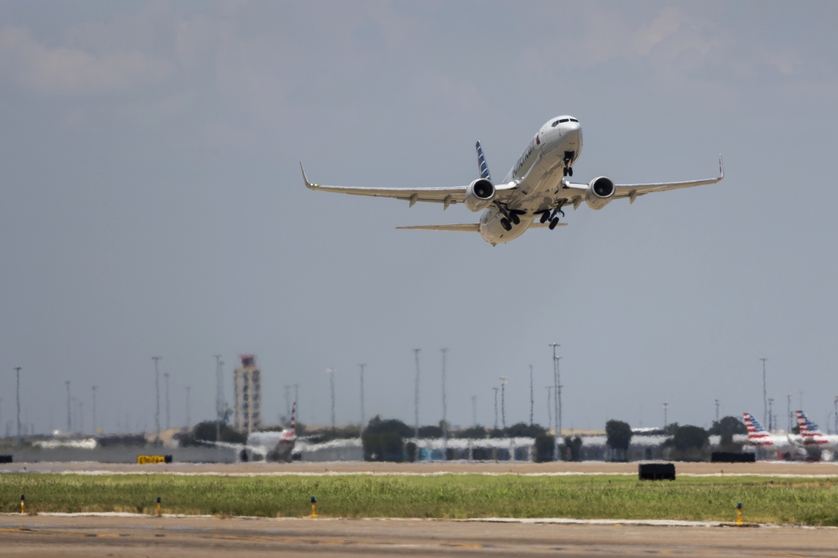

By now, both the professional aviation network and the general public have witnessed the impact of aging and sometimes unreliable Air Traffic Control (ATC) infrastructure on aviation operations in recent years. Friday, September 19, was no exception, as technical ATC problems once again caused flight disruptions, this time affecting Dallas’ two major airports, Dallas-Fort Worth International (DFW) and Dallas Love Field (DAL).
FAA’s Dallas Terminal Radar Approach Control (TRACON) facility, which manages the busy Dallas-Fort Worth metroplex, experienced a telecom and data services issue that resulted in extended ground stops and major delays as services were brought back online. The problem’s root cause was the accidental cutting of two fiber optic cables.
This situation, in turn, disrupted both primary and backup data connections that keep all the area’s ATC radars, radio frequencies, and computer systems running smoothly. So, although a local communications company initiated the issue, it highlighted redundancy problems that directly impacted FAA equipment and operations. The FAA later stated that L3Harris, a key contractor responsible for overseeing system resiliency, failed to ensure redundancies functioned as intended.
Dallas-Fort Worth Airspace Impact
This outage presented operators in the Dallas-Fort Worth area with a significant challenge, as ATC was unable to automatically release flights. This situation greatly impacted their ability to depart flights from DFW and DAL, making things more complicated for everyone involved.
To better grasp the scale of the situation, it is worth noting that American Airlines, one of the largest operators at DFW, released just nine flights between 3 PM and 6 PM local time on Friday. A more normal number for the carrier during that same time slot is closer to approximately 100 flights per hour. Understandably, this forced cancellation of a huge number of flights, as well as a cascade of delayed or diverted flights and brought on further domino-effect consequences that would last for days.
Although the exact financial impact cannot yet be determined, it is likely to be significant.
It is also unclear at this point if or how this event will affect the ongoing efforts of the Federal Aviation Administration (FAA), as the organization has been under constant pressure to upgrade its telecommunications infrastructure and other systems. While some argue that the telecommunications failure at the Dallas TRACON facility was unrelated to the ongoing ATC modernization initiative, others directly blame it on an outdated, analog setup. The latter states that this incident serves as a stark reminder of why the FAA’s multi-billion-dollar modernization efforts are essential, aiming to shift to more resilient, digital networks for safer and more reliable systems in the long run.
Government Action
Following a nationwide outage in January 2023, the Government Accountability Office (GAO) released a report (GAO-25-108162), urging the FAA to promptly conduct a comprehensive operational risk assessment of its 138 core ATC systems.
The evaluation identified that 37 percent of these systems are deemed unsustainable by the FAA, and an additional 39 percent are “potentially” unsustainable. Consequently, the GAO urged the FAA to address nine previously issued recommendations concerning life-cycle cost estimation, risk mitigation, and investment baseline.
The GAO’s report also emphasized the slow progress in NextGen modernization efforts, noting the delay of critical milestones over the years. It recommended stricter adherence to leading program management best practices to better control costs, schedules, and performance, thereby accelerating safety and efficiency enhancements in the national airspace.
In May 2025, the current administration introduced the One Big Beautiful Bill Act (H.R.1); it became law in July and provided about $12.5 billion for the modernization of the United States’ ATC systems. This initiative aims to replace decades-old radars, telecommunications lines, TRACON facilities, and control towers, as well as to fund controller recruitment, retention, and advanced training technologies.
Transportation Secretary Sean Duffy separately requested additional funding from Congress for a swift, top-down overhaul of the nation’s air traffic control system. The request includes six new control centers, replacing 618 radars, expanding Automatic Dependent Surveillance–Broadcast (ADS-B) real-time traffic feeds, and installing anti-collision systems at 200 airports.
He described the current network as “not worth saving,” estimating it will take three to four years to deploy the new, advanced system managed by a single lead contractor. This request must go through Congress’s budget process, where it will compete with other infrastructure priorities before it can be considered a viable solution to the ongoing ATC infrastructure issues.
Final Verdict
Whether or not the incident at the Dallas TRACON facility could have been avoided with freshly updated ATC infrastructure, the FAA did manage to respond quickly with conservative traffic management and no safety incidents. The event is still a reminder, though, of the increasingly urgent need for systemic modernizations to the nation’s ATC services as they work to keep the nation’s airspace safe and secure.

0 replies